How High Chuck Pressure Deforms Lathe Parts (And How to Catch It)
Written by Milan D. | 17+ Years CNC & CAD/CAM Specialist
When running a secondary turning operation (second setup), holding a part that is already half-finished can get tricky.
On one hand, the workpiece must be clamped tightly enough so it doesn't slip, chatter, or fly out of the chuck under cutting forces. On the other hand, clamping it with too much force can permanently crush or deform the part—pushing dimensions that were perfectly fine right out of drawing tolerance.
Understanding how workholding pressure impacts thin-walled tubing, sleeves, and delicate turned components is one of the biggest leaps from being a button-pusher to becoming a true CNC machinist.
Hard Jaws vs. Soft Jaws: The 120° Problem
Standard hard jaws clamp a cylindrical workpiece at three distinct contact points, spaced 120° apart. When high hydraulic chuck pressure is applied through hard jaws onto a thin-walled cylinder or pipe, those concentrated points force the round material into a subtle three-lobed shape (like a triangle with rounded corners). Also, while the machine turns the part, the insert cuts a perfect circle relative to the spindle axis. But the moment you unclamp the part and the hydraulic pressure releases, the metal relaxes back—revealing an egg-shaped or distorted wall that fails inspection.
How Soft Jaws Solve Distortion?
Unlike hard jaws, which are made out of very hard material, soft jaws can be easily machined, to match the shape of the workpiece. To prevent deformation on delicate parts, experienced operators switch to soft jaws. Soft jaws are machined to match the exact outer diameter of the workpiece. Wrapping around the circumference distributes clamping force evenly, allowing you to use sufficient holding pressure without crushing the part.
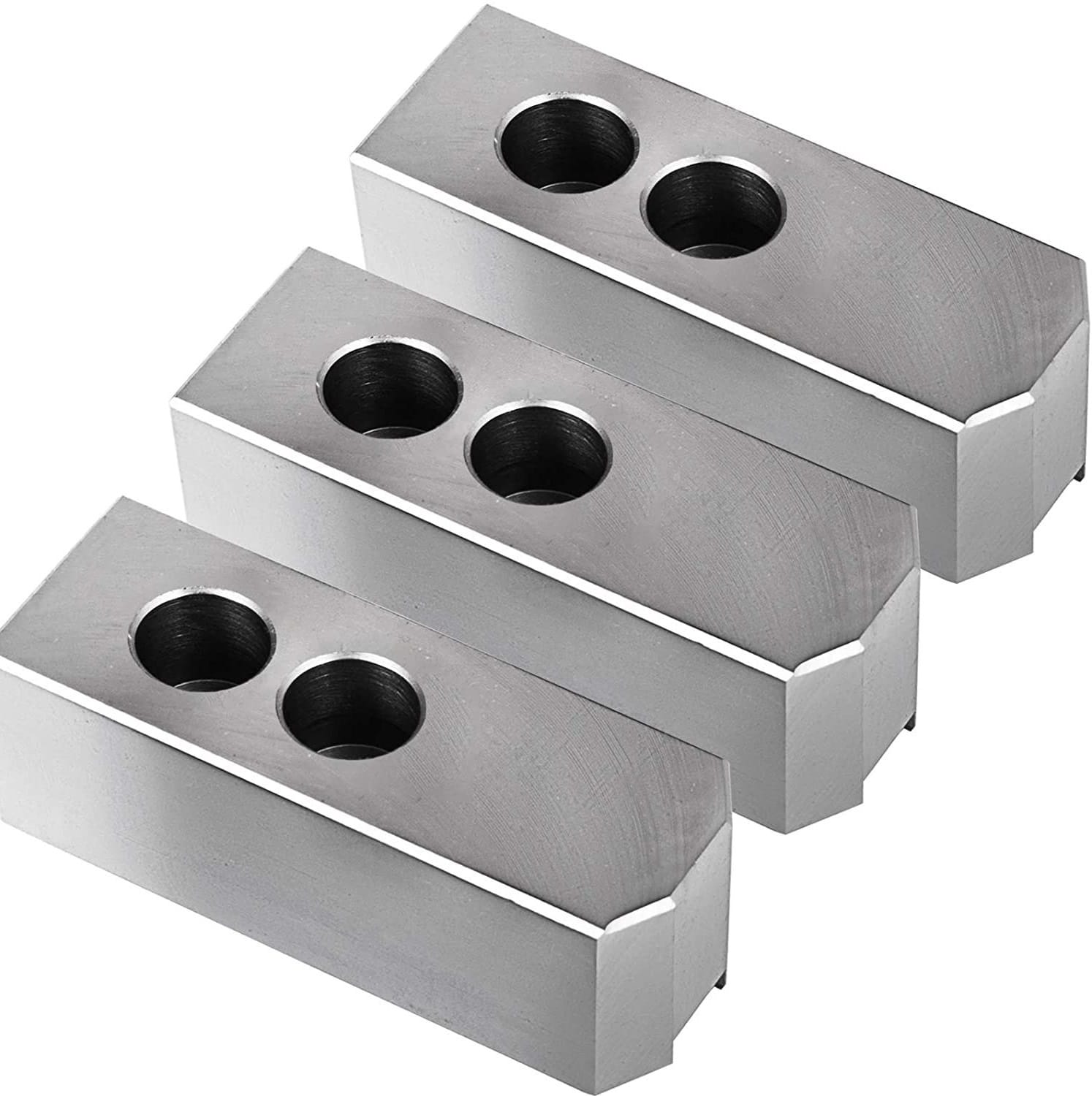
Soft Jaws
Superior Radial Runout (Concentricity)
Unlike hard jaws—which are ground separately and mounted onto the chuck serrations—soft jaws are bored directly on the machine spindle where the job will run. Because they are bored in place, unclamping and reclamping a part inside soft jaws yields nearly zero runout.
Inspection Tip (How to Measure Deformed Cylinders Correctly)
Checking the diameter in just one spot with a caliper can easily deceive you. If you measure across two points where the wall didn't bulge, the reading might look perfect—even though the part is out of round.
To reliably check a part for chuck deformation:
Close digital caliper jaws lightly onto the cylinder wall. Slowly rotate the workpiece between the caliper jaws using very gentle hand pressure. Continuously watch the digital display as the part turns full circle. If the digital readout fluctuates up and down as you rotate the part, the workpiece has been squeezed out-of-round by chuck pressure.
(Please don't apply this measuing method to micrometers. Dragging a part through a micrometer's anvil faces can score the carbide surface, damage the fine spindle threads, and permanently ruin the tool's accuracy. When checking for out-of-roundness with a micrometer, take several separate, independent measurements at different angles around the part (for example, at 12 o'clock, 2 o'clock, and 4 o'clock positions).
Don't Forget to Mark the Soft Jaws
Hard jaws are stamped with numbers (1, 2, and 3) that match the numbered slots on the chuck body. This ensures each jaw returns to its original position every time you remount it.
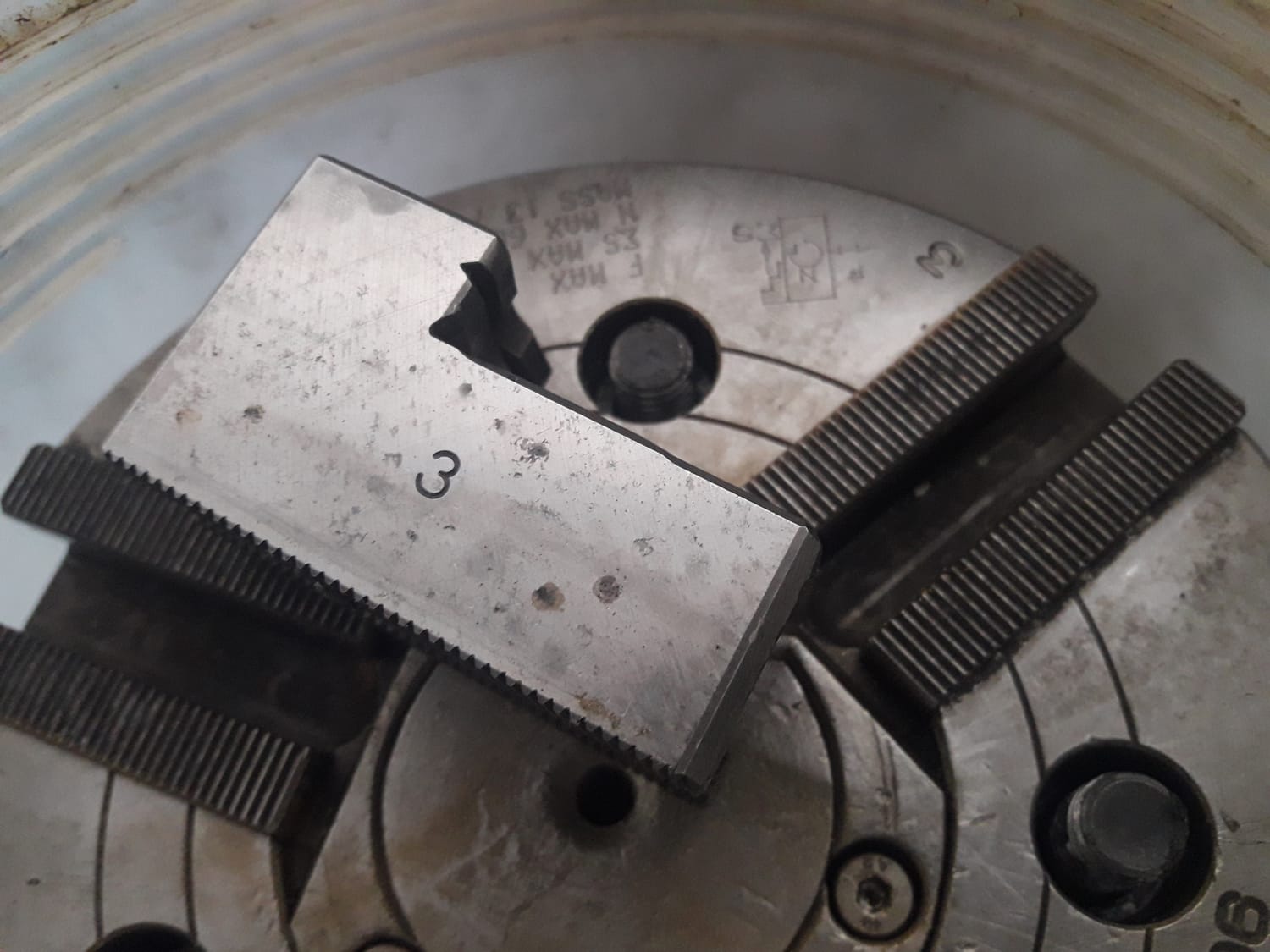
Chuck Jaw Numbers and the Chuck Body Slot Numbers Should Match
Soft jaws rarely come pre-numbered. If you plan to re-use a custom-bored set of soft jaws for a future production run, always use a steel hand stamp or scribe to mark them 1, 2, and 3 on the jaw face before removing them from the chuck. Remounting them in the exact same slot order later will save you from having to skim-bore them all over again.
If you are a new to the shop floor and if you suspect a part is deforming under chuck pressure, do not try to adjust the hydraulic pressure valves or re-bore soft jaws on your own. Call over a senior CNC machinist or setup operator. Show them the fluctuating caliper reading, and watch closely as they set up soft jaws, adjust the pressure regulator, and dial in the part. Observing how an experienced operator balances workholding force with part geometry is one of the fastest ways to build true machining intuition.
Soft Jaws Cutting
Ready to Master CNC Machining and Programming?
Don't just read about CAM software, start using it. Enter your email below to get instant access to our Free Demo Lessons and see exactly how we train the next generation of top-tier CNC operators and programmers.
Machining Tutor is the premier online training platform for future CNC professionals.
We combine immersive, real-world video lessons with 24/7 AI Mentorship and Live 1-on-1 Classes to take you from 'Zero Knowledge' to 'Job-Ready' in record time.
Stop guessing and start mastering G-Code, CAD/CAM, and Machine Setup today.